Website Design
What Pages Should Every Business Website Have?
July 5, 2026
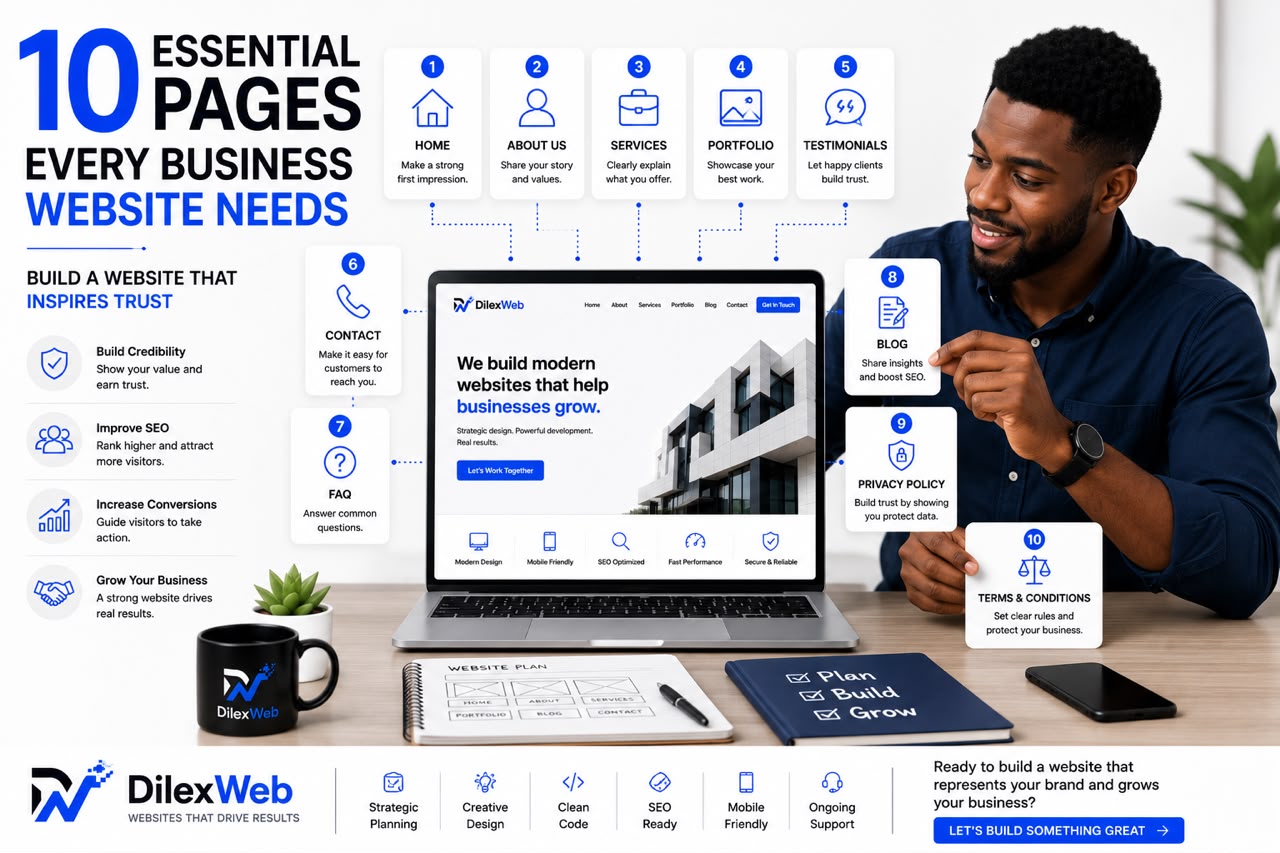
Building a business website is exciting, but many business owners ask the same question:
"What pages do I actually need?"
The answer depends on your business, but there are a few essential pages that almost every professional website should include.
These pages help visitors understand who you are, what you offer, and why they should choose your business.
Let's explore them.
1. Home Page
Your homepage is your digital storefront.
It should immediately answer three questions:
- Who are you?
- What do you do?
- Why should customers choose you?
A great homepage includes:
- A clear headline
- A short introduction
- Your main services
- A strong call-to-action
- Customer testimonials
- Contact information
First impressions matter.
2. About Us Page
People buy from businesses they trust.
Your About page should tell your story.
Include:
- Your mission
- Your experience
- Your values
- Your team
- What makes your business different
Keep it authentic and customer-focused.
3. Services Page
Clearly explain every service you offer.
For each service, include:
- A description
- The benefits
- Who it's for
- Frequently asked questions
- A call-to-action
Detailed service pages also improve SEO.
4. Portfolio or Gallery
Show visitors what you've already accomplished.
Whether you're a web designer, photographer, builder, or fashion designer, displaying previous work builds confidence.
People want proof before they buy.
5. Testimonials
Customer reviews are powerful.
Include:
- Client names (with permission)
- Photos if available
- Success stories
- Results achieved
Positive testimonials reduce hesitation.
6. Contact Page
Never make customers search for your contact information.
Include:
- Phone number
- Email address
- Office location
- Contact form
- Google Map (if applicable)
The easier you are to reach, the more enquiries you'll receive.
7. Frequently Asked Questions (FAQ)
Answering common questions saves time.
Examples include:
- How long does it take?
- How much does it cost?
- Do you offer support?
- What industries do you serve?
A good FAQ also helps with SEO.
8. Blog
A blog isn't just for news.
Publishing helpful articles:
- Improves Google rankings
- Builds authority
- Answers customer questions
- Generates long-term traffic
That's exactly why DilexWeb invests in educational content.
9. Privacy Policy
If you collect contact forms, emails, or customer information, a Privacy Policy helps explain how that data is handled.
It also improves professionalism and trust.
10. Terms & Conditions
Depending on your business, terms and conditions help explain how your services work and protect both you and your customers.
Bonus Pages
As your business grows, you may also add:
- Careers
- Pricing
- Case Studies
- Resources
- Booking Page
- Customer Portal
- Online Store
Your website should grow alongside your business.
Final Thoughts
A successful website isn't about having hundreds of pages.
It's about having the right pages that answer customer questions and guide visitors toward taking action.
At DilexWeb, we carefully plan every website to ensure it includes the pages your business actually needs—no more and no less.
Whether you're launching your first website or redesigning an existing one, we'll help you create a structure that supports your goals and delivers a great user experience.
Keep reading
Related articles
Website Design
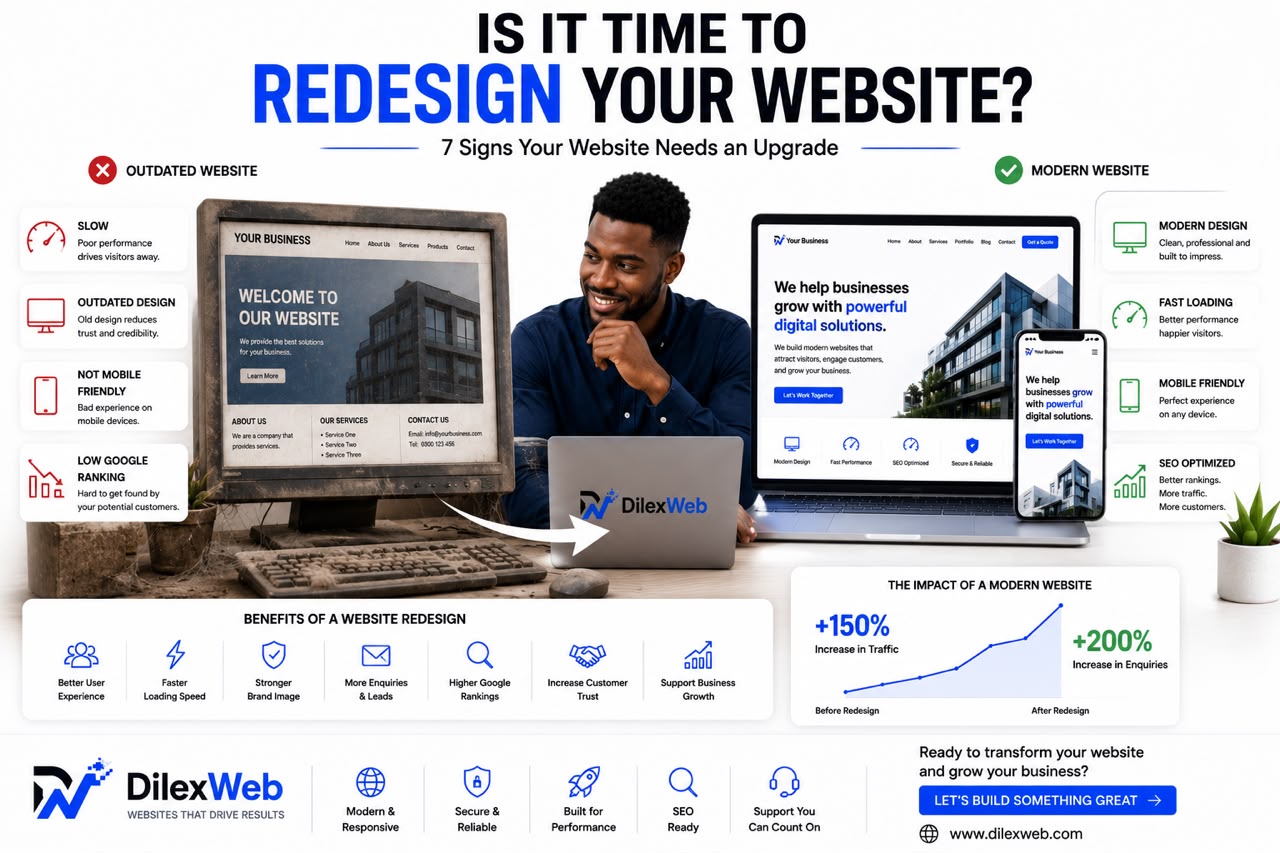
How Often Should You Redesign Your Business Website?
Is your website starting to look outdated? Learn how often you should redesign your business website, the warning signs to watch for, and how a modern redesign can improve customer trust and increase conversions.
July 5, 2026
Website Design
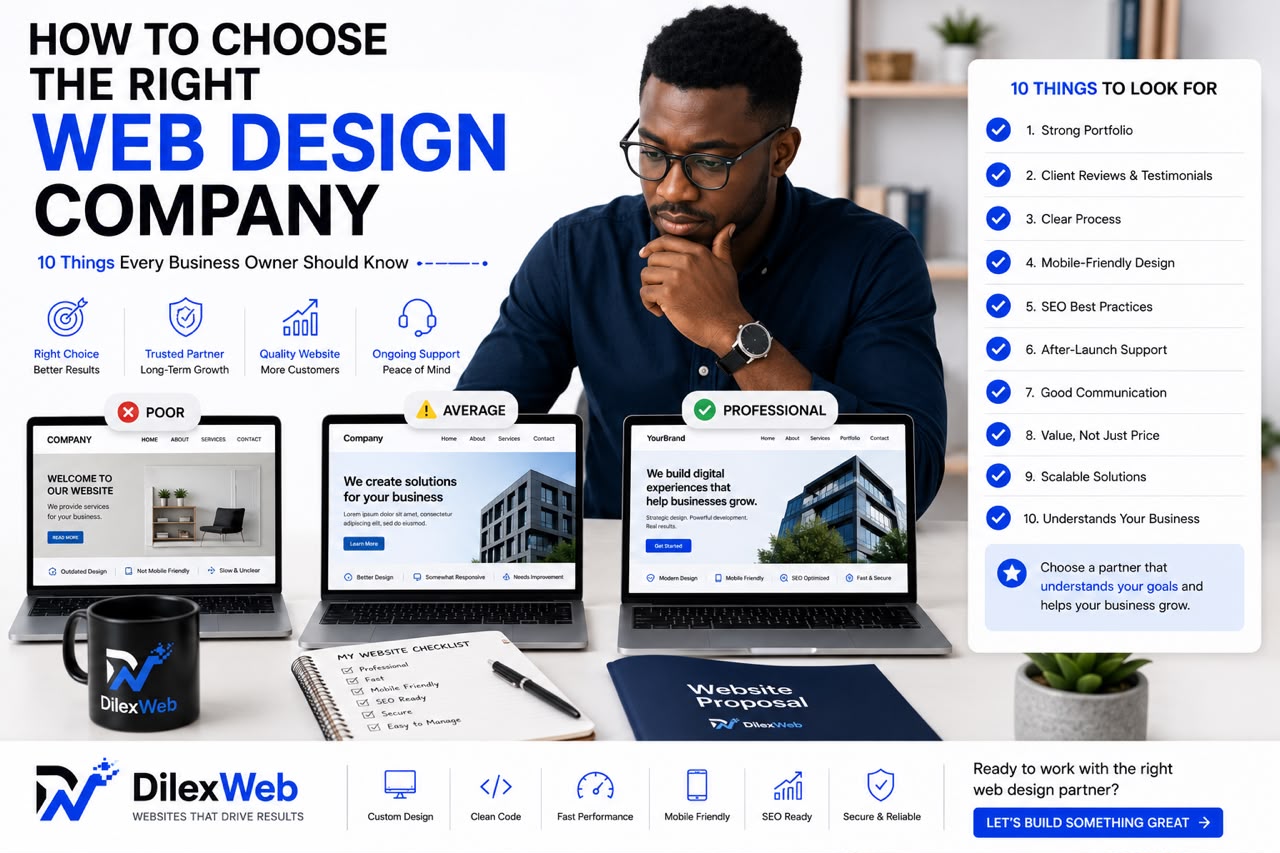
How Do I Choose the Right Web Design Company? 10 Things to Look For
Choosing the right web design company can make a huge difference to your business. Learn the 10 most important factors to consider before hiring a web designer, so you can invest with confidence.
July 5, 2026
Website Design
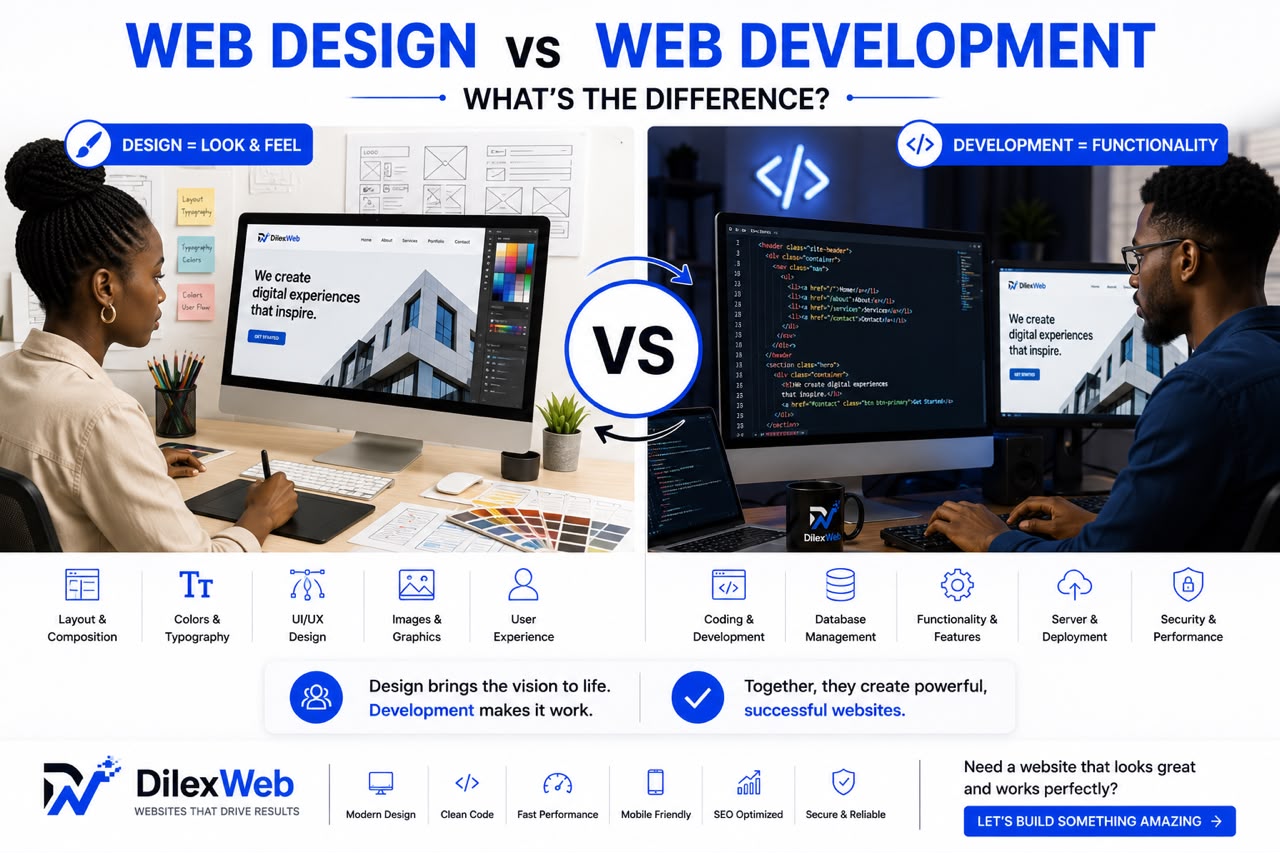
What Is the Difference Between Web Design and Web Development?
People often use the terms web design and web development interchangeably, but they aren't the same. Learn the key differences, how they work together, and why both are important for building a successful website.
July 5, 2026