Website Performance
Why Is My Website So Slow? 10 Common Causes and How to Fix Them
July 5, 2026
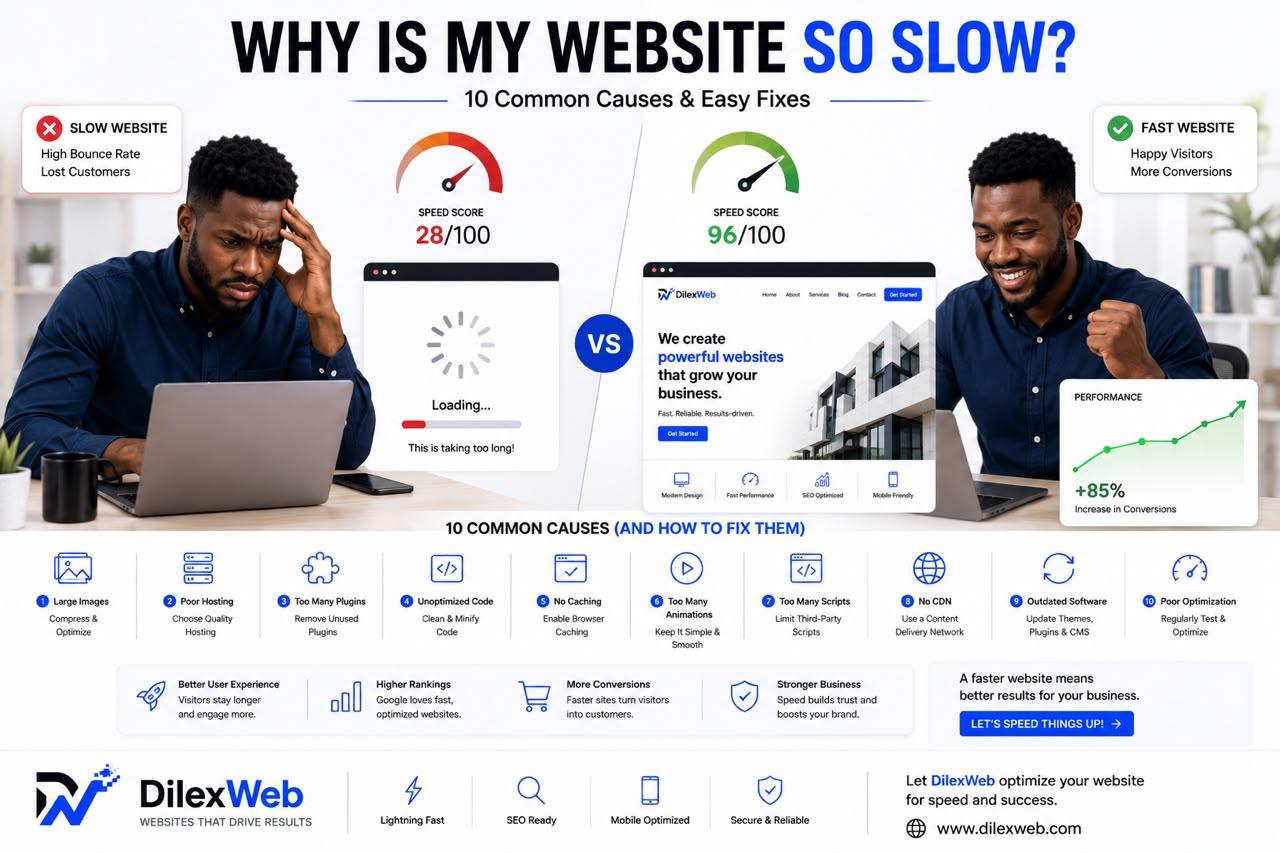
Few things frustrate website visitors more than a slow-loading website.
If your pages take too long to load, visitors may leave before they even see your products or services. A slow website can also reduce your search engine rankings and cost you valuable sales.
The good news is that most website speed issues can be fixed.
Let's explore the most common causes.
1. Large Images
High-resolution images look great, but if they aren't optimized, they can dramatically slow down your website.
Compress images before uploading them and use modern formats such as WebP where possible.
2. Poor Web Hosting
Your hosting provider plays a huge role in your website's performance.
Cheap hosting plans often place hundreds of websites on the same server, reducing speed during busy periods.
Choosing reliable hosting is an investment in your business.
3. Too Many Plugins
Plugins add useful features, but installing too many can slow your website considerably.
Remove plugins you no longer use and keep only those that add real value.
4. Unoptimized Code
Poorly written HTML, CSS, and JavaScript can increase loading times.
Clean, efficient code helps browsers load your pages faster.
5. No Browser Caching
Browser caching stores parts of your website on a visitor's device.
This allows returning visitors to load pages much faster.
6. Too Many Animations
Animations can improve the appearance of a website, but excessive effects often reduce performance.
Keep animations smooth and purposeful.
7. Too Many Third-Party Scripts
Live chat tools, analytics, social media widgets, advertising scripts, and tracking codes all add extra requests.
Only install the services you actually need.
8. No Content Delivery Network (CDN)
A CDN stores copies of your website on servers around the world.
Visitors receive content from the server closest to them, improving loading speeds.
9. Outdated Software
Older versions of your CMS, themes, or plugins may reduce performance and create security risks.
Keep your website updated regularly.
10. Poor Website Optimization
Sometimes several small issues combine to create one slow website.
Regular performance testing helps identify hidden problems before they affect visitors.
Why Website Speed Matters
A fast website helps you:
- Improve user experience
- Increase conversions
- Reduce bounce rates
- Rank better on Google
- Build trust with visitors
- Generate more enquiries
Every second matters.
How Can You Test Your Website Speed?
Several free tools can help you measure your website's performance, including:
- Google PageSpeed Insights
- GTmetrix
- Pingdom Website Speed Test
These tools identify problems and recommend improvements.
Final Thoughts
Website speed isn't just a technical issue—it's a business advantage.
A faster website creates a better experience for visitors and gives your business a stronger chance of turning those visitors into customers.
At DilexWeb, we build websites with performance in mind from day one. We optimize speed, improve user experience, and ensure every website is ready to perform at its best.
If your website feels slow, we'd be happy to help you make it faster.
Keep reading
Related articles

Website Design
How Often Should You Redesign Your Business Website?
Is your website starting to look outdated? Learn how often you should redesign your business website, the warning signs to watch for, and how a modern redesign can improve customer trust and increase conversions.
July 5, 2026
Website Basics
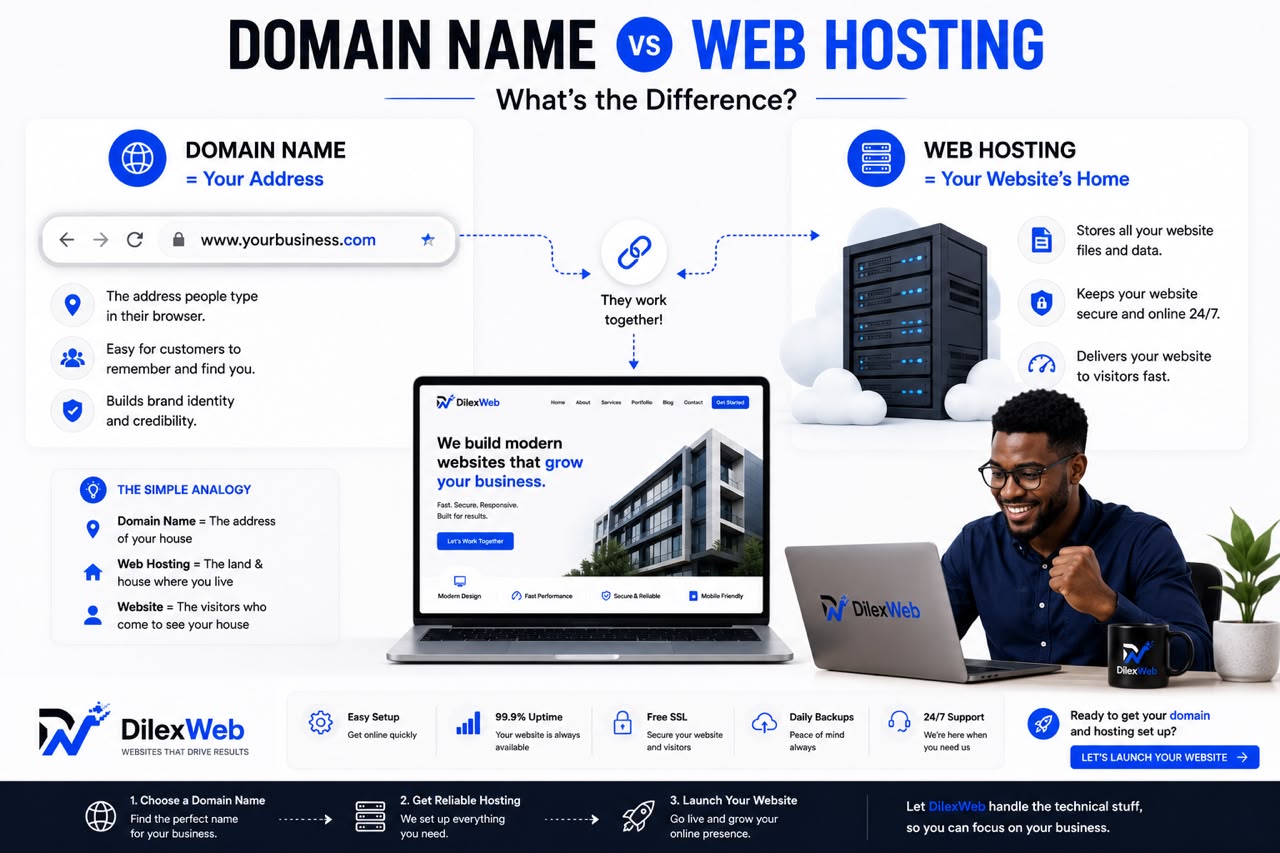
What's the Difference Between Web Hosting and a Domain Name?
Many people think web hosting and a domain name are the same thing, but they're not. Learn the difference, why you need both, and how they work together to keep your website online.
July 5, 2026
Website Basics
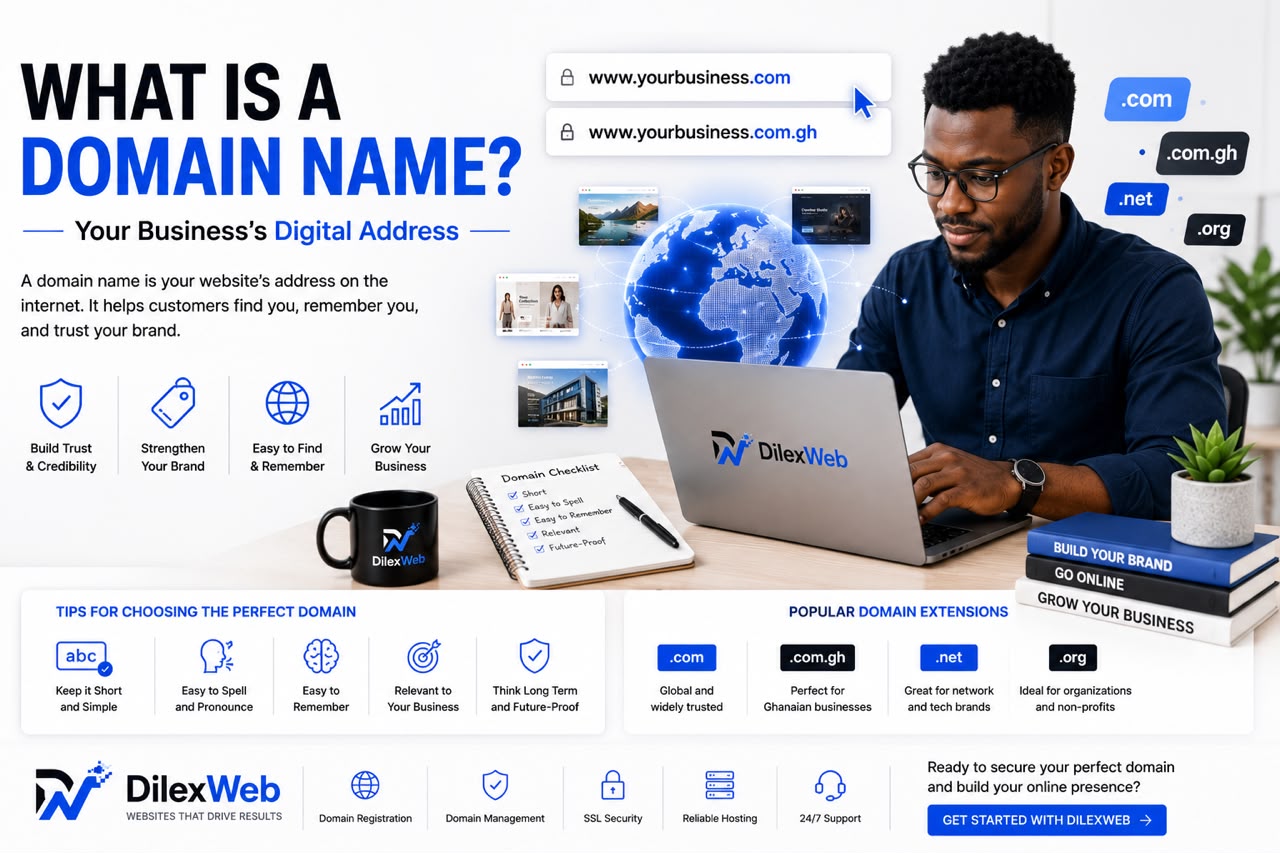
What Is a Domain Name and Why Does Your Business Need One?
A domain name is more than just your website's address—it's a key part of your brand. Learn what a domain name is, why it matters, and how to choose the perfect one for your business.
July 5, 2026